Epoxy vs Polyaspartic Garage Floor Coatings: Which Is Better?
Planning a garage floor project in Virginia or West Virginia? Request your free on-site estimate.
If you're researching garage floor coatings, you've probably seen both "epoxy" and "polyaspartic" used — sometimes interchangeably. They're not the same product, and the difference matters for how long your floor lasts. Here's a plain-English comparison from a company that installs both every week across Virginia and West Virginia.
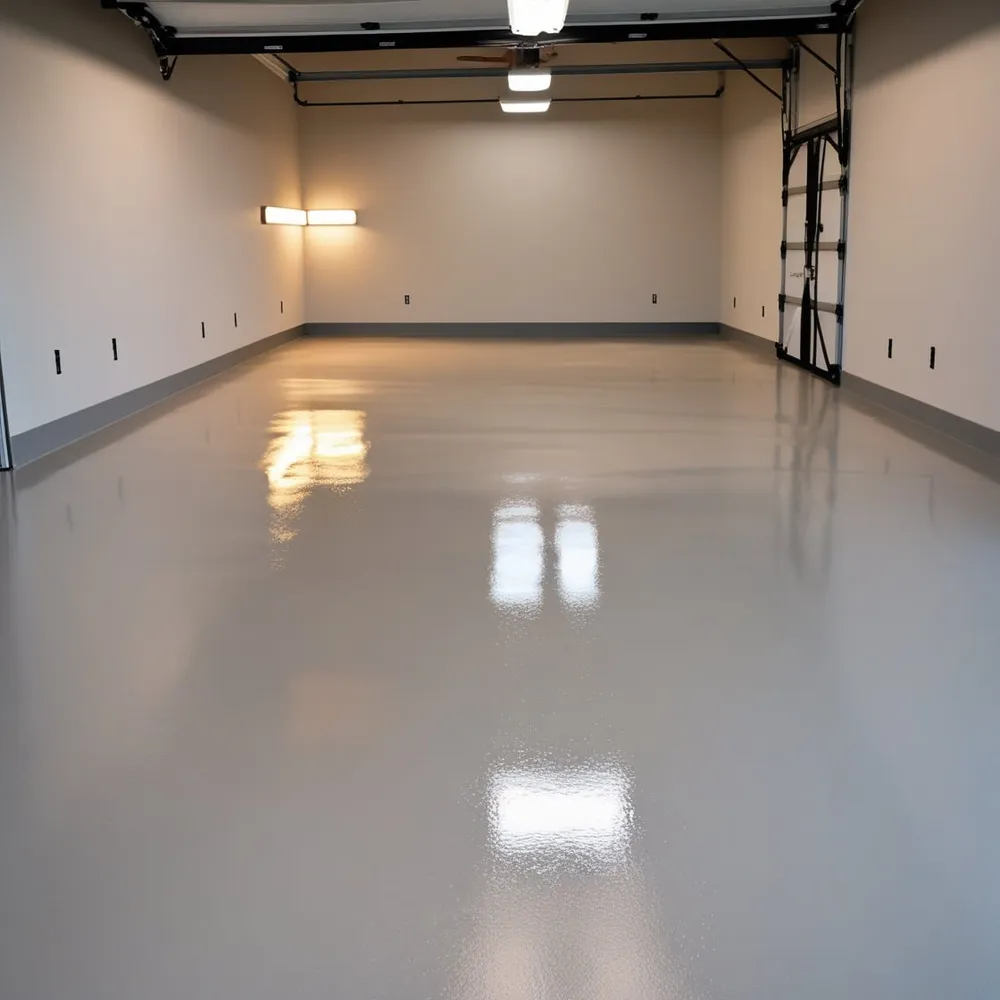
What is an epoxy garage floor coating?
Epoxy is a two-part resin that chemically hardens into a thick, rigid coating. Its biggest strength is adhesion and build: applied over properly ground concrete, a commercial-grade epoxy base coat bonds deep into the slab and creates a dense, durable foundation. Its weaknesses are that it cures slowly, doesn't love cold-weather application, and — critically — yellows over time when exposed to UV light, even the indirect sunlight that comes through an open garage door.
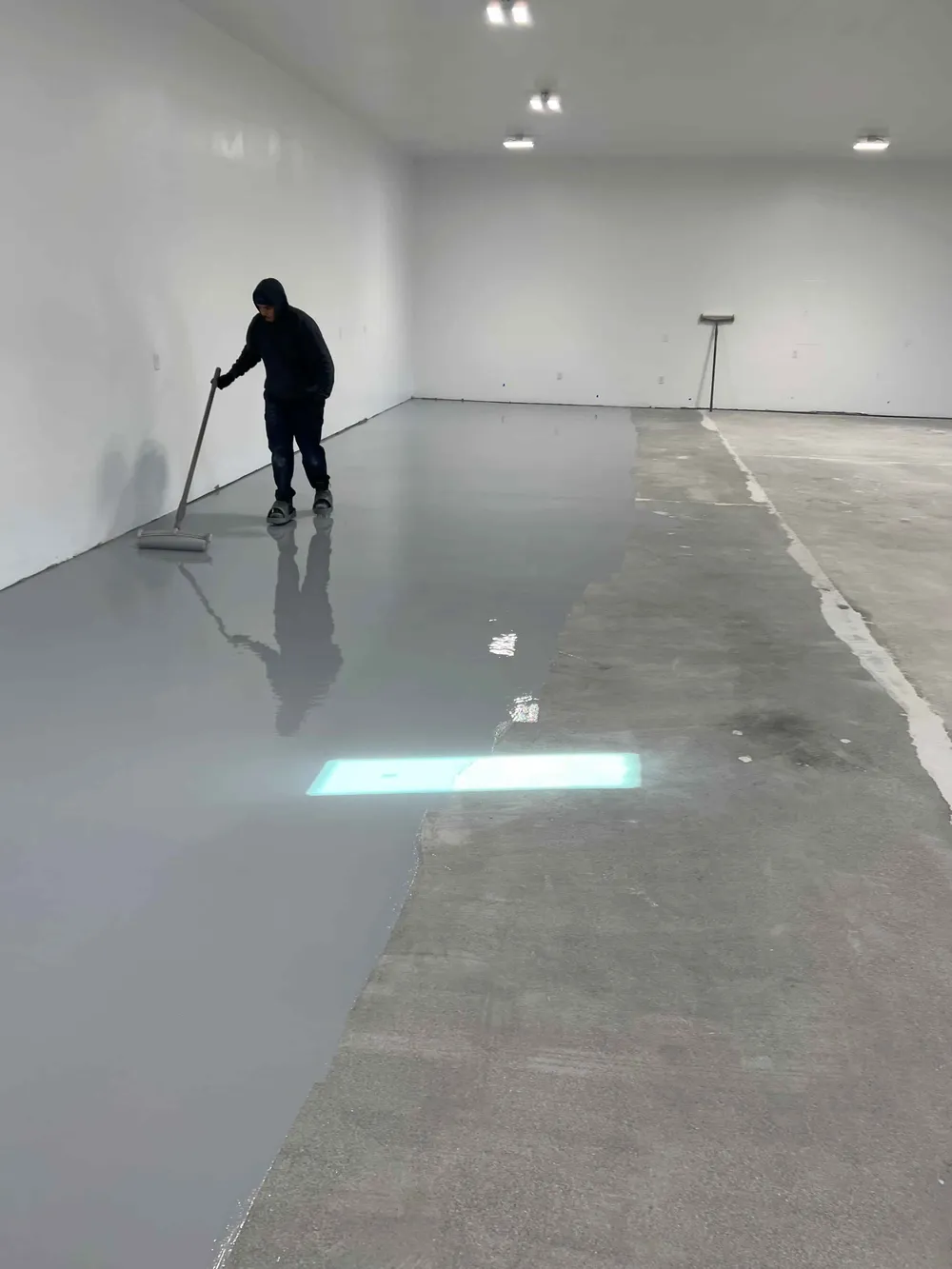
What is a polyaspartic coating?
Polyaspartic is a newer coating technology related to polyurea. It cures fast (even in cold weather), stays flexible through temperature swings, and is completely UV-stable — it will not yellow. It's also highly resistant to chemicals, road salt, and hot tire pickup. Its trade-off: as a base coat it cures so quickly that it can bond less deeply than epoxy on some slabs.
The honest answer: the best floors use both
This isn't an either/or choice. The highest-performing system — and the one we install — layers each product where it's strongest:
- Epoxy base coat over diamond-ground concrete, for maximum adhesion and thickness.
- Decorative flake broadcast for appearance and slip resistance.
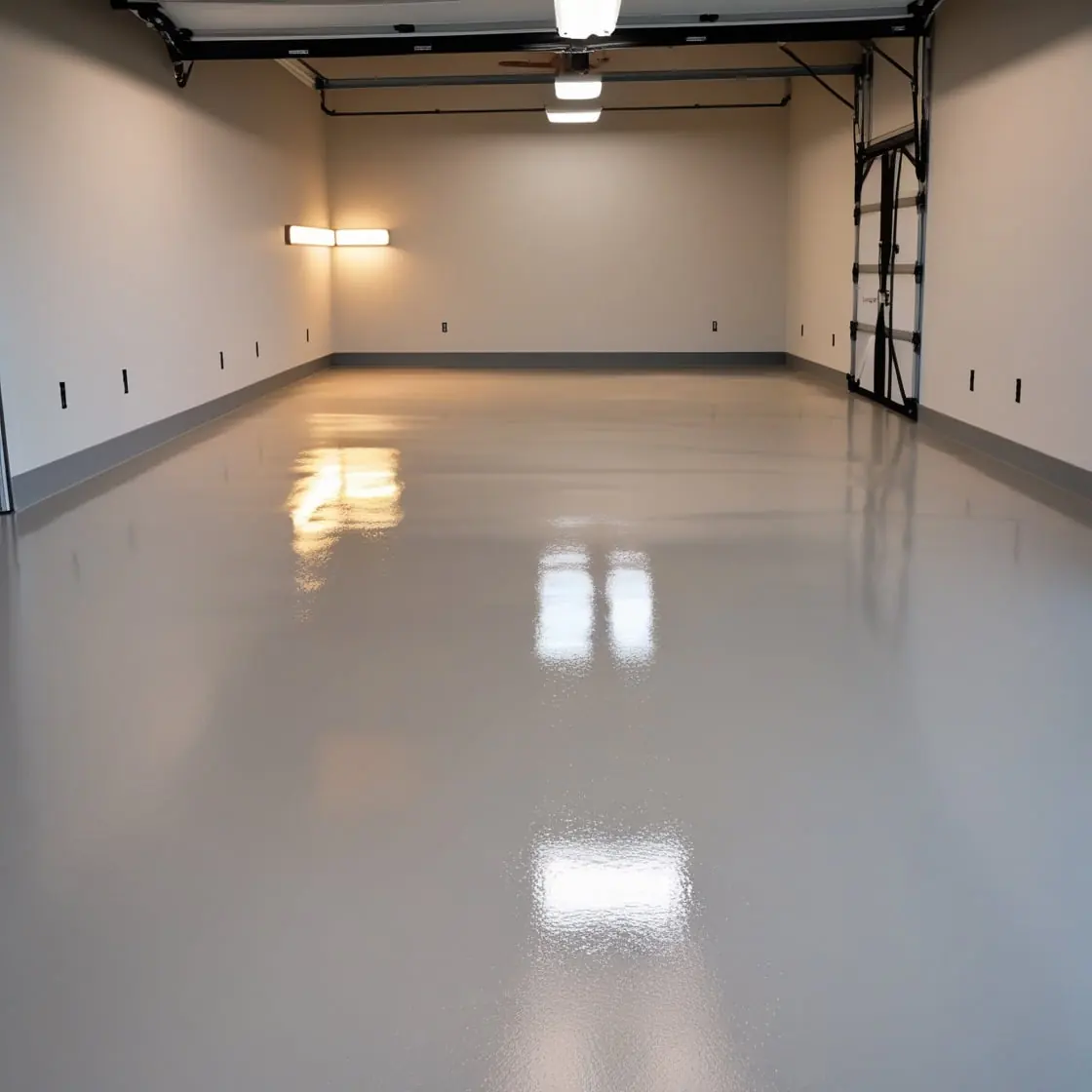
- Polyaspartic top coat for UV stability, chemical resistance, fast cure, and a high-gloss finish that stays clear for decades.
Be cautious with companies that pitch "all-polyaspartic in one day" as automatically superior, or that sell an epoxy-only system with no protective top coat. Either can be done well, but the hybrid system gives you epoxy's bond with polyaspartic's protection.
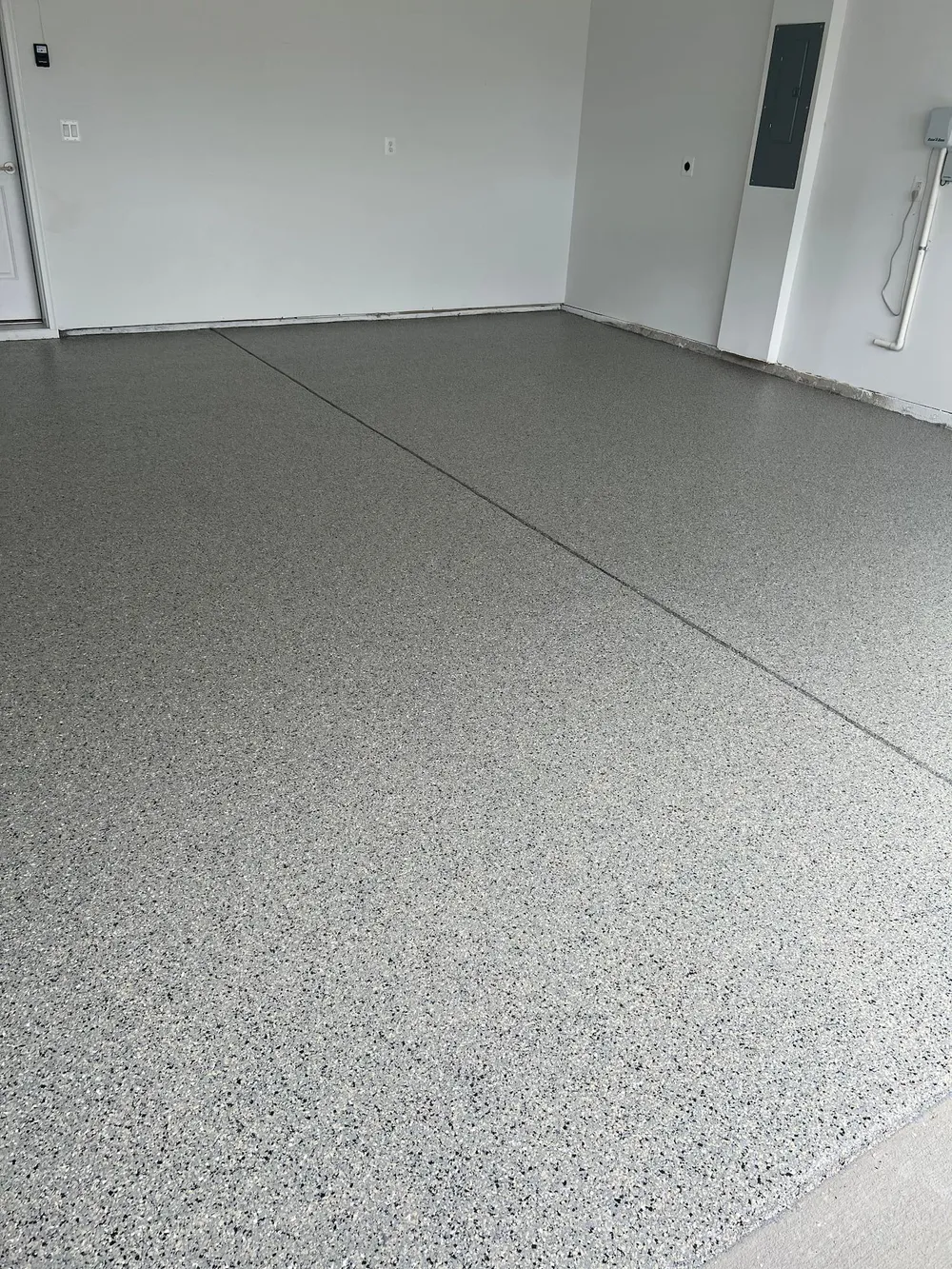
Side-by-side comparison
- Cure time: Epoxy needs roughly a day or more per coat; polyaspartic can be walkable in hours.
- UV resistance: Epoxy yellows; polyaspartic doesn't.
- Flexibility: Epoxy is rigid; polyaspartic flexes with freeze-thaw movement — a real advantage in the Shenandoah Valley climate.
- Adhesion: Epoxy penetrates deeper into prepared concrete.
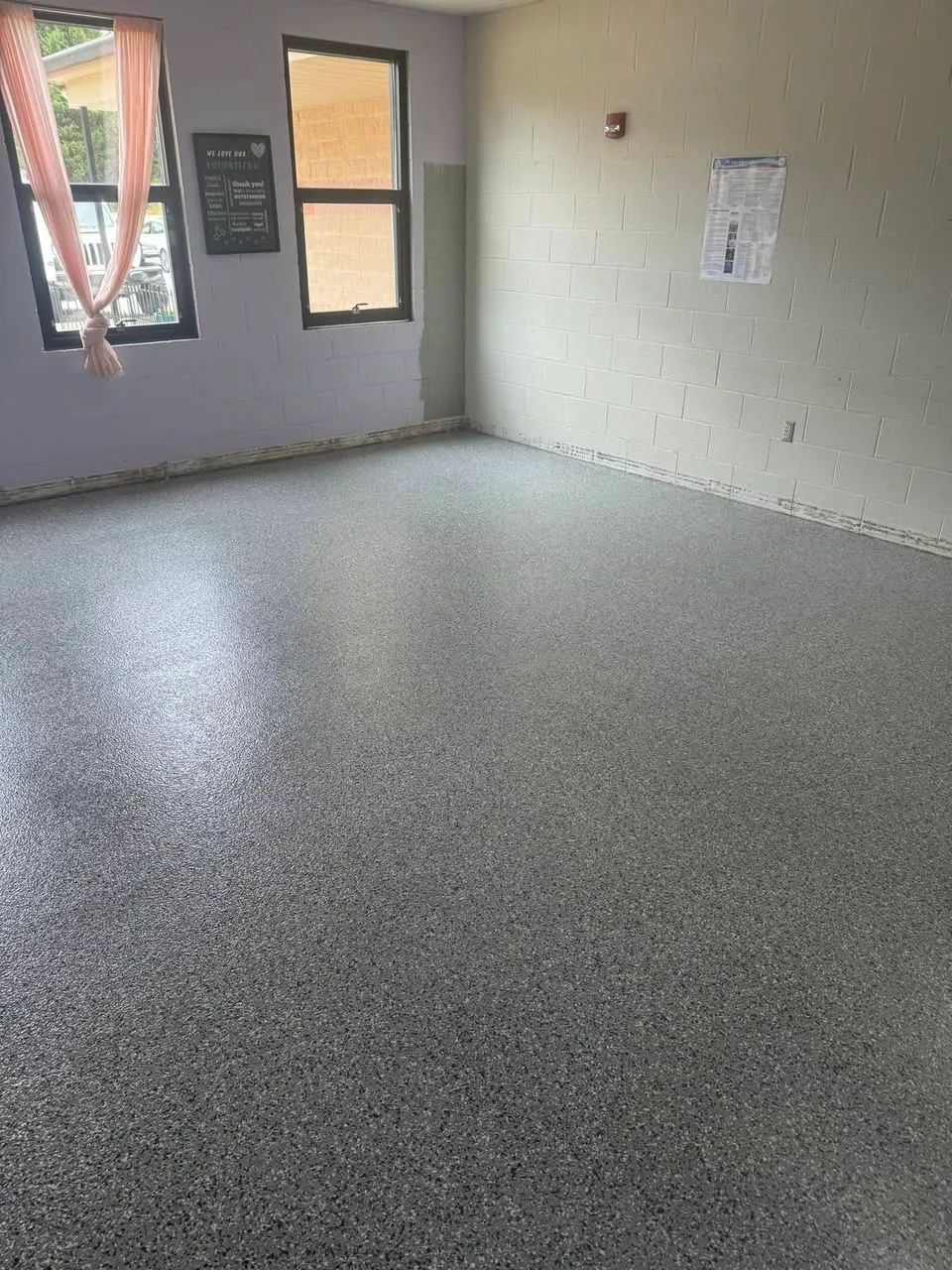
What matters more than the chemistry
Either product will fail over badly prepared concrete. Diamond grinding the slab matters more to your floor's lifespan than which resin goes on top. When choosing an installer, ask exactly what preparation is included. Our guide to choosing a garage floor company covers the other questions worth asking.
Ready for a Floor That Lasts?
Ultimate Garage Floors installs epoxy and polyaspartic floor coatings across Virginia and West Virginia. Estimates are free, on-site, and no-obligation.